Advancing Surgery Skills with VR Training
Surgical training has always been a critical part of medical education. Traditionally, it involved cadaver dissections, observation, and supervised practice in operating rooms. However, these methods have limitations such as availability, risk to patients, and variability in learning experiences. Today, immersive surgical training using virtual reality (VR) is transforming how surgeons acquire and refine their skills. This technology offers a safe, repeatable, and highly realistic environment to practice complex procedures.
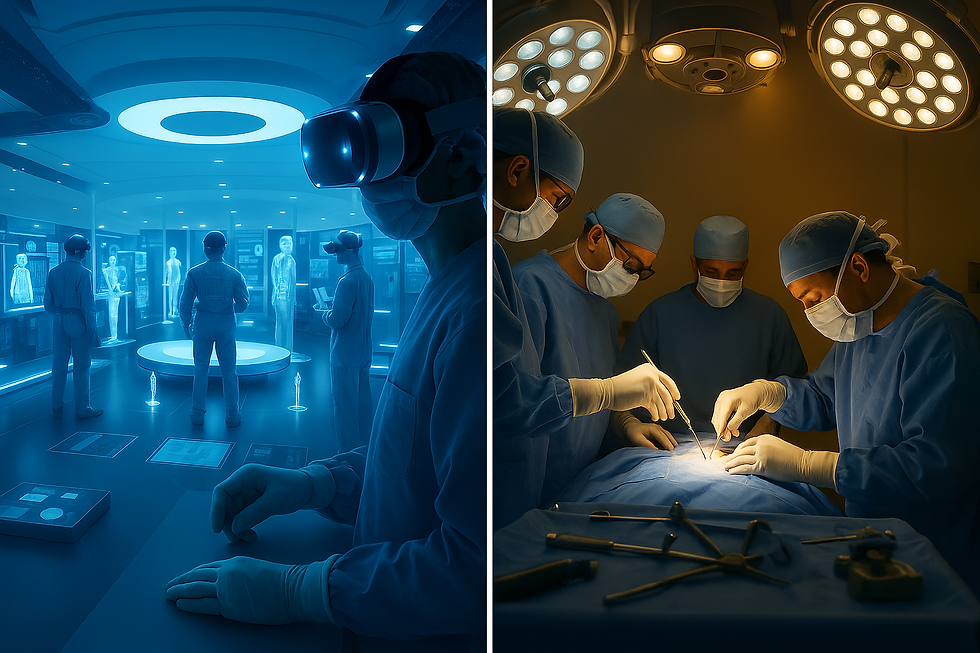
Virtual reality allows surgeons to step into a simulated operating room where they can interact with 3D models of human anatomy and surgical instruments. This hands-on experience helps build muscle memory, improve hand-eye coordination, and enhance decision-making under pressure. The immersive nature of VR training also reduces cognitive load by focusing attention on critical tasks without distractions.
The Benefits of Immersive Surgical Training
Immersive surgical training offers numerous advantages over traditional methods. First, it provides risk-free practice. Surgeons can make mistakes and learn from them without any harm to patients. This is especially important for rare or complex surgeries where real-life opportunities to practice are limited.
Second, VR training is highly customizable. Trainees can select different scenarios, difficulty levels, and anatomical variations to match their learning needs. This flexibility accelerates skill acquisition and builds confidence.
Third, immersive training enables objective performance assessment. Advanced VR systems track metrics such as precision, speed, and instrument handling. These data help instructors provide targeted feedback and identify areas for improvement.
Fourth, VR training supports remote learning and collaboration. Surgeons from different locations can join the same virtual environment, share insights, and practice together. This expands access to expert guidance and fosters a global learning community.
Finally, immersive surgical training reduces costs associated with cadaver labs, travel, and operating room time. Hospitals and training centers can invest in VR setups that serve many learners efficiently.
What is a VR training course?
A VR training course is a structured program that uses virtual reality technology to teach specific surgical skills or procedures. These courses typically include:
Interactive modules that simulate real-life surgeries with step-by-step guidance.
Hands-on practice sessions where learners manipulate virtual instruments and tissues.
Performance tracking to monitor progress and mastery of techniques.
Scenario-based challenges to test decision-making and adaptability.
Expert feedback through integrated communication tools or post-session reviews.
For example, a VR course on laparoscopic surgery might guide a trainee through inserting trocars, navigating the abdominal cavity, and performing precise cuts and sutures. The course can simulate complications like bleeding or organ damage, requiring the trainee to respond appropriately.
Such courses are designed to complement traditional education, providing a safe space to build competence before operating on real patients.
How VR Enhances Surgical Skill Development
VR enhances surgical skill development in several key ways:
Repetition and Consistency
Trainees can repeat procedures as many times as needed to achieve proficiency. Unlike real surgeries, VR does not have time constraints or patient safety concerns, allowing focused practice on challenging steps.
Realistic Haptics and Visuals
Advanced VR systems incorporate haptic feedback that simulates the feel of tissues and resistance. High-resolution 3D visuals provide depth perception and spatial awareness critical for delicate maneuvers.
Stress Management Training
Some VR scenarios include time pressure or unexpected complications to help surgeons develop composure and quick thinking under stress.
Team Training
VR can simulate entire operating room teams, enabling surgeons to practice communication and coordination with nurses and anesthesiologists.
Skill Transfer to Real Surgery
Studies show that skills learned in VR translate effectively to improved performance in the operating room, reducing errors and procedure times.
By integrating these elements, immersive surgical training creates a comprehensive learning experience that builds both technical and non-technical skills.
Implementing VR Training in Surgical Education
To successfully implement VR training, institutions should consider the following steps:
Assess Training Needs
Identify which surgical procedures or skills would benefit most from VR simulation.
Choose the Right VR Platform
Select systems that offer realistic simulations, user-friendly interfaces, and robust performance tracking.
Integrate with Curriculum
Blend VR modules with lectures, hands-on workshops, and clinical rotations for a balanced approach.
Train Instructors
Educators should be proficient in using VR tools and interpreting performance data to guide learners effectively.
Evaluate Outcomes
Monitor trainee progress and gather feedback to continuously improve the VR training program.
Encourage Regular Practice
Provide easy access to VR setups so learners can practice frequently and maintain skills.
By following these guidelines, surgical programs can maximize the benefits of immersive training and prepare surgeons for the demands of modern healthcare.
The Future of Surgical Training with VR
The future of surgical training is closely tied to advancements in VR technology. Emerging trends include:
Artificial Intelligence Integration
AI can personalize training by adapting scenarios based on learner performance and predicting skill gaps.
Augmented Reality (AR) Hybrid Systems
Combining VR with AR can overlay virtual information onto real surgical environments for enhanced guidance.
Cloud-Based Platforms
Cloud VR enables remote access to training modules and collaborative learning across institutions worldwide.
Expanded Procedure Libraries
More surgical specialties and complex procedures will be simulated, broadening training opportunities.
Improved Haptic Devices
Next-generation haptic feedback will provide even more realistic tactile sensations.
As these innovations mature, immersive surgical training will become an indispensable tool for developing competent, confident surgeons. Institutions that embrace VR technology will lead the way in improving patient outcomes and advancing medical education.
For those interested in exploring vr surgery training, this resource offers detailed information on cutting-edge VR solutions tailored for surgical skill development.
Embracing Immersive Training for Better Surgical Outcomes
Immersive surgical training is revolutionizing how surgeons learn and practice. By providing a safe, realistic, and flexible environment, VR empowers learners to master complex procedures with confidence. The technology supports continuous improvement, objective assessment, and collaborative learning, all of which contribute to higher standards of patient care.
Healthcare institutions and educators should actively explore and invest in VR training programs to stay at the forefront of surgical education. As the technology evolves, it will unlock new possibilities for skill development and ultimately save lives through better-prepared surgeons.
The journey toward advanced surgical proficiency begins with embracing immersive training today.

Comments